

When you invest in the stock market, getting regular dividend payments is like receiving a paycheck from your investments. The SPY ETF is one of the most popular ways to earn dividends while investing in America’s top 500 companies. Let’s explore the SPY dividend history and understand how these payments work.
What is SPY and How Do Its Dividends Work?
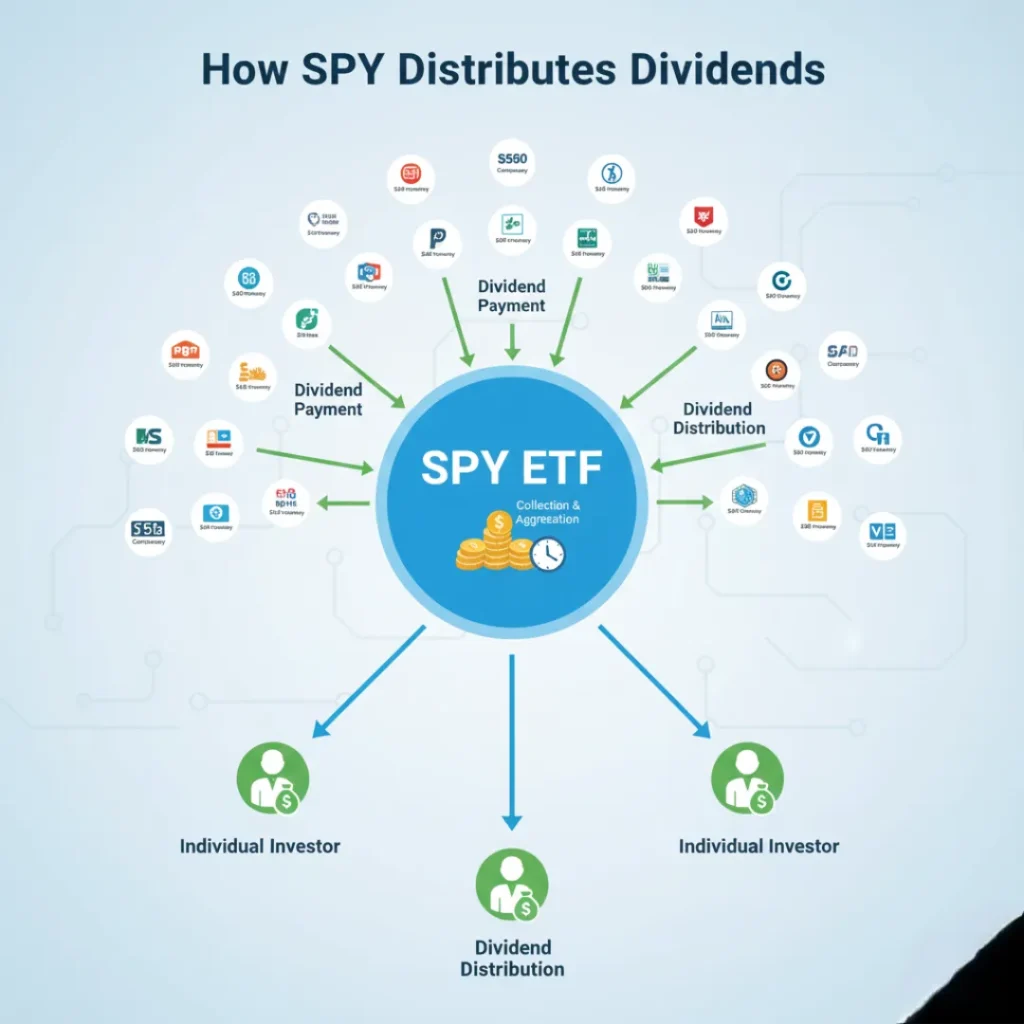
SPY, also known as the SPDR S&P 500 ETF Trust, is like a basket that holds pieces of 500 different companies. When you buy one share of SPY, you own a tiny piece of all these companies together. Since many of these companies pay dividends to their shareholders, SPY collects all that money and pays it to you four times a year.
Think of it this way: imagine you own a small piece of 500 lemonade stands. When each stand makes money and shares profits, SPY collects your share from all 500 stands and gives it to you in one payment. That’s exactly how SPY dividends work!
The SPY dividend yield typically ranges between 1.3% to 1.8% per year. This means if you invest $10,000 in SPY, you might receive around $130 to $180 in dividend payments annually.
SPY Dividend Payment Schedule
SPY pays dividends four times per year, which we call quarterly payments. Here’s when you can expect your dividend payments:
- March – End of Q1 (First Quarter)
- June – End of Q2 (Second Quarter)
- September – End of Q3 (Third Quarter)
- December – End of Q4 (Fourth Quarter)
The exact payment dates change slightly each year, but they usually fall in the last month of each quarter. To receive a dividend payment, you must own SPY shares before the “ex-dividend date,” which is typically a few days before the payment date.
Historical SPY Dividend Trends (2014-2024)
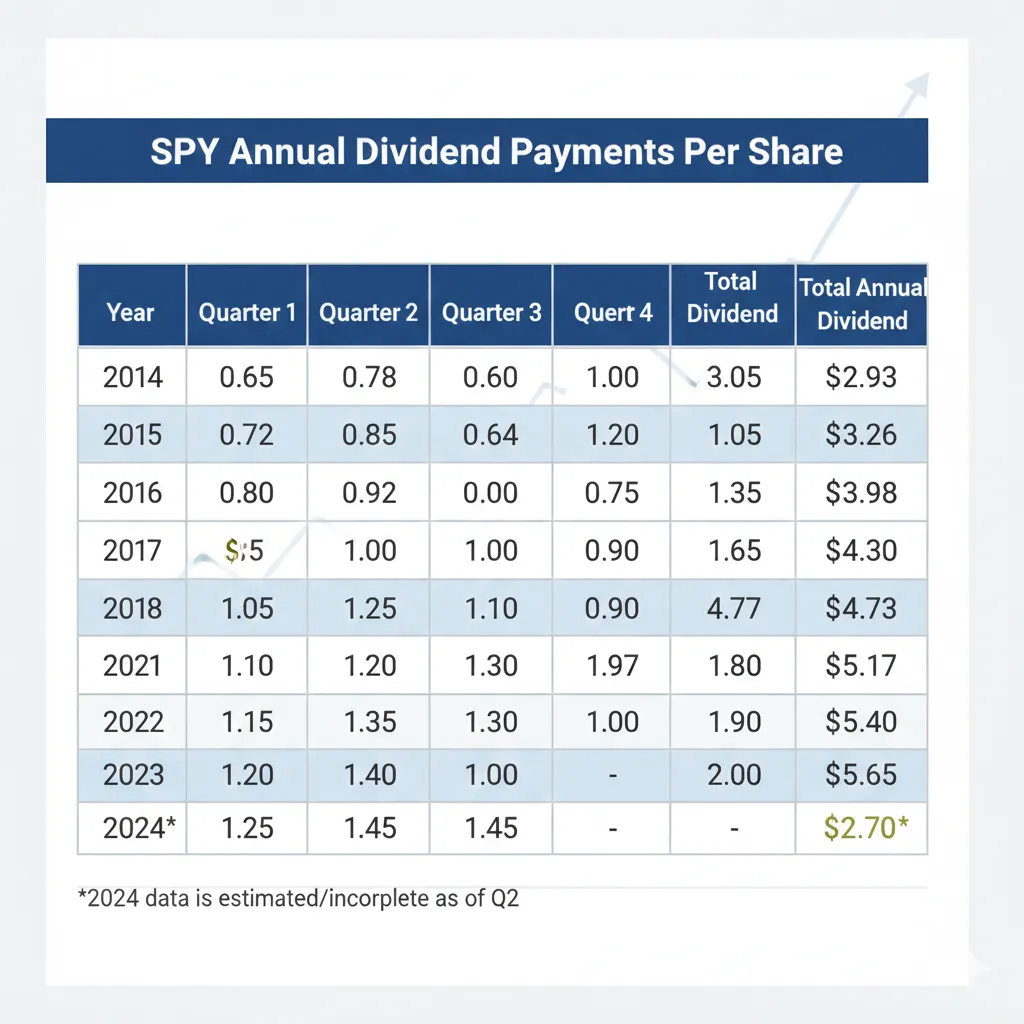
Looking at the SPY dividend history over the past decade, we can see a clear pattern of growth. While individual quarterly payments may vary, the overall trend shows steady increases over time.
In 2014, SPY’s annual dividend was approximately $3.56 per share. By 2024, this amount has grown significantly, reflecting the overall growth of the S&P 500 companies. The dividend has increased almost every year, though the rate of growth varies based on how well the underlying companies perform.
Some interesting facts about SPY dividend history:
- Dividends generally increase during strong economic periods
- Payments remained relatively stable even during market downturns
- The quarterly amounts can vary based on the seasonal earnings of underlying companies
- Fourth quarter (December) payments are often larger than other quarters
Understanding SPY Dividend Yield
The dividend yield tells you how much you earn in dividends compared to the price you pay for the stock. It’s calculated using this simple formula:
Dividend Yield = (Annual Dividend ÷ Current Stock Price) × 100
For example, if SPY costs $450 per share and pays $6.30 in annual dividends, the yield would be 1.4%. The SPY dividend yield changes daily because the stock price moves up and down, even though dividend payments stay relatively stable.
When stock prices go down, the dividend yield goes up (you’re getting the same dividend for less money). When stock prices go up, the yield goes down. This is important to understand when evaluating SPY as an investment.
How SPY Dividends Compare to Individual Stocks
Many investors choose SPY over individual dividend stocks for several good reasons:
Diversification: Instead of relying on one company’s dividend, you receive payments from 500 companies. If one company cuts its dividend, it barely affects your total payment.
Consistency: SPY has a long history of reliable dividend payments. Individual companies can cut or eliminate dividends during tough times.
Lower Risk: Because your money is spread across 500 companies, you’re not putting all your eggs in one basket.
Less Research: You don’t need to analyze hundreds of companies individually. SPY does the work for you by tracking the S&P 500.
However, SPY’s dividend yield is typically lower than high-dividend individual stocks. Some companies pay yields of 4%, 5%, or even higher, while SPY usually stays between 1.3% and 1.8%.
Maximizing Your SPY Dividend Returns
Here are smart strategies to make the most of your SPY dividends:
1. Dividend Reinvestment (DRIP): Instead of taking cash payments, automatically use your dividends to buy more SPY shares. Over time, this creates compound growth as your new shares also pay dividends.
2. Long-Term Holding: SPY dividends are qualified for favorable tax treatment if you hold shares for more than 60 days. Long-term investors pay lower tax rates on these dividends.
3. Regular Contributions: Add money to your SPY investment consistently. This dollar-cost averaging approach helps you build a larger position that generates more dividend income.
4. Tax-Advantaged Accounts: Hold SPY in retirement accounts like IRAs or 401(k)s where dividends can grow tax-deferred or even tax-free (in Roth accounts).
Tax Implications of SPY Dividends
Understanding taxes on your SPY dividends helps you keep more money in your pocket. Most SPY dividends are classified as “qualified dividends,” which receive preferential tax treatment.
Qualified dividends are taxed at lower rates than ordinary income:
- 0% tax rate if your income is below certain thresholds
- 15% tax rate for middle-income earners
- 20% tax rate for high-income earners
Your broker will send you a Form 1099-DIV each year showing your dividend income. You’ll need this form when filing your taxes. If you hold SPY in a tax-advantaged retirement account, you don’t pay taxes on dividends until you withdraw money (or never, in the case of Roth accounts).
Is SPY Right for Your Dividend Strategy?
SPY works well for investors who want:
- Steady, reliable dividend payments
- Low-maintenance investing
- Broad market exposure
- Long-term wealth building
SPY might not be ideal if you want:
- Maximum dividend income (some stocks pay much higher yields)
- Monthly dividend payments (SPY pays quarterly)
- Sector-specific exposure
For most beginner investors, SPY provides an excellent foundation for a dividend portfolio. You can always add other dividend investments later as you become more experienced.
FAQs
Q1: How much dividend does SPY pay per share?
SPY’s dividend per share varies each quarter and grows over time. In recent years, the annual dividend has been approximately $5.50 to $6.50 per share, paid in four quarterly installments. The exact amount changes based on the dividend payments from the underlying S&P 500 companies.
Q2: When does SPY pay dividends?
SPY pays dividends four times per year, typically at the end of March, June, September, and December. The exact dates vary slightly each year. You must own shares before the ex-dividend date (usually announced a few weeks in advance) to receive that quarter’s payment.
Q3: Is SPY a good dividend stock?
SPY is an excellent choice for dividend investors who want reliability and diversification. While its yield (1.3-1.8%) is lower than some individual dividend stocks, SPY offers consistency, low risk, and a long history of dividend growth. It’s perfect for building a foundation in your dividend portfolio.
Q4: How can I automatically reinvest SPY dividends?
Most brokers offer a Dividend Reinvestment Plan (DRIP) that automatically uses your dividend payments to purchase more SPY shares. Log into your brokerage account, find SPY in your holdings, and enable DRIP. This happens automatically with no trading fees.
Q5: What is the SPY dividend yield right now?
The SPY dividend yield changes daily as the stock price fluctuates. You can find the current yield on financial websites like Yahoo Finance, Google Finance, or your broker’s platform. Simply divide the annual dividend by the current share price, then multiply by 100 to get the yield percentage.
Q6: Has SPY ever cut its dividend?
SPY has never completely eliminated its dividend, but quarterly payments can fluctuate slightly. Because SPY holds 500 different companies, it’s extremely rare for the overall dividend to decrease significantly. The diversification provides stability that individual stocks cannot match.
Conclusion
The SPY dividend history shows a reliable track record of consistent payments and steady growth over the past decade. While the dividend yield may not be the highest in the market, SPY offers unmatched diversification, low risk, and long-term stability for dividend investors.
Whether you’re just starting your investment journey or building a retirement portfolio, understanding SPY dividend history helps you make informed decisions. By reinvesting dividends and holding for the long term, you can harness the power of compound growth to build substantial wealth over time.
Ready to start earning dividends with SPY? Open a brokerage account today and begin your journey toward passive income and financial freedom!